Bonded Grit Ruins Polish and Coating Results
Clay Bar and Paint Decontamination in Lubbock for embedded contaminants that roughen the surface before correction or ceramic application
Redline AutoCare removes bonded contaminants from your vehicle's paint using a clay bar process that pulls out particles washing alone won't touch. You've likely felt a gritty texture when running your hand across the hood or doors, even after a fresh wash—that's industrial fallout, tree sap, rail dust, and mineral deposits embedded in the clear coat. This service addresses that roughness by mechanically lifting each particle without scratching the paint, leaving a perfectly smooth surface ready for polishing, waxing, or ceramic coating.
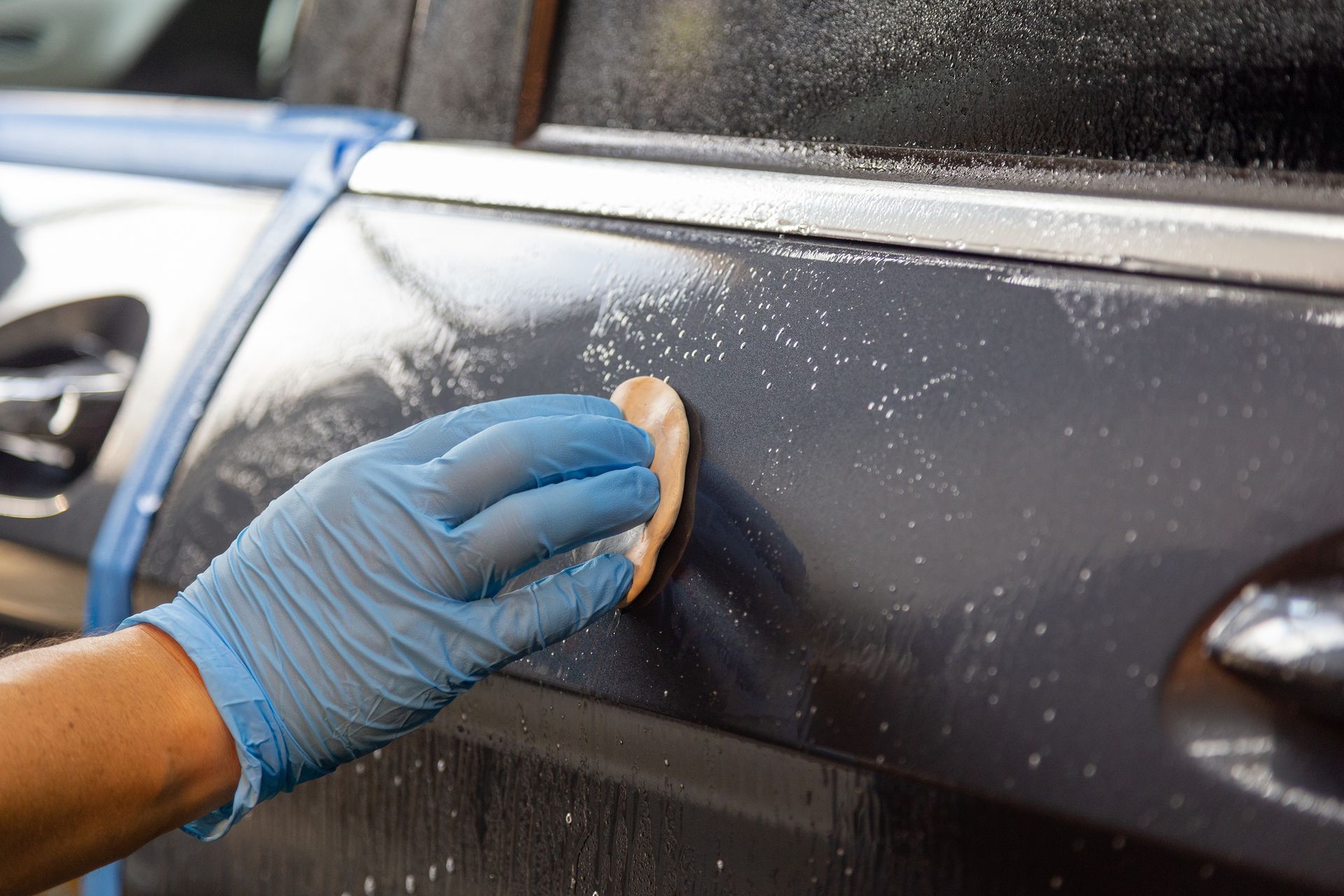
The process involves misting a panel with a lubricant, then gliding a clay bar across the surface in overlapping passes. The clay grabs contaminants as it moves, and you'll hear and feel them release as the bar works. In Lubbock, where dust storms drop fine sediment and high winds carry everything from pollen to tiny metal particles, this kind of contamination builds up quickly and creates a rough base that prevents polishes and sealants from bonding evenly.
If you're planning paint correction or ceramic coating, this step ensures the surface is truly clean and ready to accept those treatments without interference.
Why Decontamination Precedes Protection
You'll see the technician fold and knead the clay bar frequently to expose clean sections, and switch to a fresh bar once the surface becomes too loaded. The work progresses panel by panel, with each section wiped down after claying to remove any residue left by the lubricant or loosened particles.
Once decontamination is complete, your paint will feel like glass under your palm, and polishing pads or coating applicators will glide smoothly without dragging or skipping. Redline AutoCare includes this service in most paint correction and ceramic coating packages, because skipping it means working over embedded grit that can scratch the clear coat during the polishing stage or prevent coatings from curing properly.
The service removes surface-bonded contamination but does not correct scratches, swirls, or oxidation—that requires separate polishing. It's most effective on vehicles exposed to industrial areas, highway driving, or prolonged outdoor parking where airborne particles settle and bond to the paint over time.
Questions About Paint Decontamination
Here's what you should know about how the process works and when it's necessary.
What types of contaminants does clay bar remove?
It pulls out rail dust, brake dust, industrial fallout, tree sap, tar spots, and mineral deposits that embed in the clear coat and create a rough texture you can feel but often can't see.
How often should I decontaminate my paint?
Most vehicles benefit from decontamination once or twice a year, or whenever the surface feels gritty after washing, especially if you park outdoors or drive frequently on highways in Lubbock where airborne debris is constant.
Why can't washing remove these particles?
Soap and water lift loose dirt, but bonded contaminants stick to the clear coat through chemical or mechanical adhesion, requiring the physical action of a clay bar to break that bond without damaging the paint.
When should I schedule this before other services?
You should complete decontamination before any polishing, waxing, or coating service, since those processes depend on a perfectly smooth surface to deliver even results and maximum durability.
How does this improve ceramic coating performance?
A contaminated surface prevents the coating from making full contact with the clear coat, which leads to uneven curing, reduced hydrophobic effect, and shorter lifespan compared to application on properly prepped paint.
Redline AutoCare performs clay bar and paint decontamination on-site throughout Lubbock, preparing your vehicle for the next level of paint care. Get in touch when you're ready to smooth the surface and set up the best possible foundation for protection or correction.